
Dr. Moumita Nandy: Advancing Mental Health, Human Sustainability and Community Wellbeing
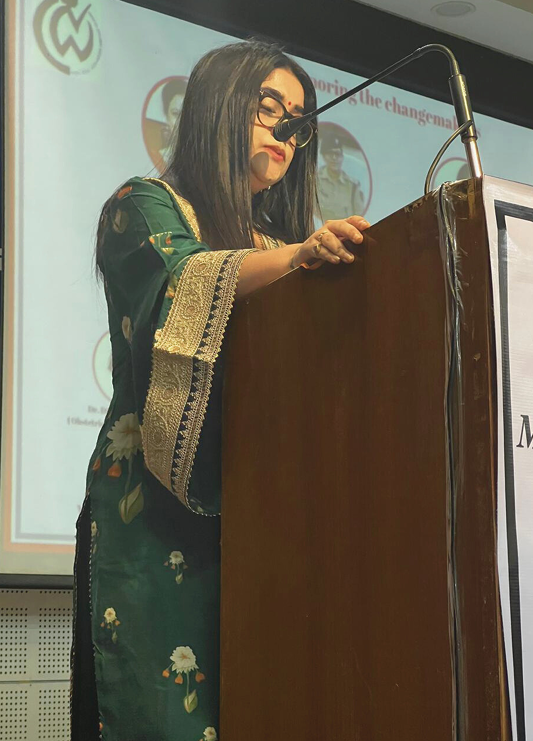
Dr. Moumita Nandy is a distinguished clinical psychologist, researcher, entrepreneur, mental health advocate, and the Founder and Director of Haus of Calm. With more than 15 years of experience in clinical psychology, psycho-oncology, psychotherapy, research, mental health education, and community-based interventions, she has built a professional journey centered on making mental health and emotional wellbeing more accessible, inclusive, evidence-based, and socially relevant. Her work brings together clinical expertise, research, advocacy, education, and a wider vision of human wellbeing.
Dr. Nandy’s professional journey reflects a sustained contribution to mental health, wellbeing, community engagement, and social development. Her work extends beyond conventional clinical practice to encompass research, public engagement, preventive mental healthcare, organizational wellbeing, and advocacy for underserved communities. These contributions form the foundation of her recognition in the Clinical Psychology category of the Tagore International Award.
Dr. Nandy’s academic and professional preparation reflects a multidisciplinary approach to psychological care. She holds a PhD in Clinical Psychology from Dr. APJ Abdul Kalam University, Indore, and a Master’s degree in Clinical Psychology from Pune University. She completed a Post-Doctoral Fellowship at IIT Delhi and an M.Phil in Psycho-Oncology from the Cancer Institute, Chennai. Her additional professional training includes an Advanced Diploma in Forensic Psychology and Criminal Profiling and an Advanced Diploma in Integrated Clinical Hypnotherapy. She has also undertaken specialized training and certifications in Cognitive Behavioural Therapy, Expressive Therapy, Rational Emotive Behaviour Therapy, Mindfulness, and Emotional Freedom Techniques.
Across more than 15 years of professional practice, Dr. Nandy has worked with individuals and communities facing a wide range of psychological, emotional, behavioural, and psychosocial challenges. Her clinical approach incorporates evidence-based psychological interventions while recognizing the importance of individual circumstances, culture, social environment, and lived experience. She is also a trained Narrative Therapist and has been mentored by internationally recognized narrative therapy practitioner David Epston.

Her professional expertise further includes anger-management treatment and motivational interventions. Through her work as a motivational speaker with Santulan and through mental health workshops and awareness programmes, she has contributed to broader conversations around emotional regulation, resilience, self-awareness, and psychological wellbeing.
A significant part of Dr. Nandy’s career has been associated with psycho-oncology and psychosocial care. Her professional exposure includes institutions such as Sir Ganga Ram Hospital, the Cancer Institute in Chennai, Tata Medical Centre in Kolkata, Serenity Psychiatric Care, Mind Vriksha Psychiatry Clinic, Door of Hope, Intro Spectrum Psychological Care, and Reach Out for Life Foundation in Pune. These experiences have allowed her to engage with patients, families, healthcare professionals, and multidisciplinary teams in settings where
psychological support is an important component of comprehensive care.
Her research interests demonstrate a particular commitment to the relationship between communication, psychological wellbeing, and healthcare outcomes. She has participated in studies related to depression, substance abuse, and psycho-oncology at the Cancer Institute, Chennai, and Tata Medical Centre, Kolkata. Her academic and research interests have included oncologists’ perspectives on barriers to cancer pain management, the impact of oncologists’ communication skills on cancer patients, psychosocial communication, patient-physician communication in oncology care, and perceptions of community-linked care.
These areas of inquiry highlight one of the central themes of Dr. Nandy’s professional philosophy: healthcare is not only about medical intervention but also about communication, dignity, emotional support, trust, and the psychological experience of the individual receiving care. Her work in psycho-oncology has therefore explored the human dimension of illness and the importance of strengthening communication between patients, physicians, families, and care teams.
Dr. Nandy has also contributed to professional education. She has served as Visiting Faculty for Expressive Arts Therapy at VIMHANS, sharing her knowledge with learners and professionals interested in therapeutic approaches that incorporate creativity and emotional expression. Her work in expressive therapy reflects her broader belief that mental healthcare can benefit from approaches that address the individual as a whole rather than focusing solely on symptoms.

Dr. Nandy is also associated with the Men’s Mental Health Society – Best for Him, where she serves as a Senior Psychologist. Her work in this area contributes to the increasingly important conversation surrounding men’s mental health, emotional expression, help-seeking behaviour, and the reduction of stigma around psychological support.
She has also conducted workshops for Voiceless India, an animal-activist organisation, demonstrating the breadth of her public engagement and mental health advocacy. Her workshops and awareness initiatives have been acknowledged for their impact and contribution to mental health advocacy.
A major part of Dr. Nandy’s professional vision is embodied in Haus of Calm, the wellbeing and mental health initiative she founded. Through Haus of Calm, she has worked toward developing accessible and practical approaches to psychological wellness, preventive mental health, emotional literacy, mindfulness, trauma-informed care, and therapeutic support.
The initiative reflects her belief that mental health should not be addressed only after a crisis occurs. Preventive psychological care, emotional education, resilience-building, and early intervention can play a significant role in helping individuals and communities maintain wellbeing. Her work particularly focuses on youth mental health, women’s wellbeing, workplace emotional health, and capacity-building for mental health professionals.
Dr. Nandy’s vision has also expanded into the concept of “Human Sustainability.” The concept seeks to connect mental health, preventive healthcare, organizational wellbeing, longevity, and public policy within a broader framework for individual and societal wellbeing. Rather than considering wellbeing as an isolated personal concern, Human Sustainability places psychological health within the wider context of workplaces, communities, healthcare systems, policy, and social development.
This approach is particularly relevant to a rapidly changing society where stress, isolation, workplace pressures, uncertainty, and social inequalities can affect psychological wellbeing. By linking mental health with preventive healthcare and organizational wellbeing, Dr. Nandy advocates for systems that support people not merely in times of crisis but throughout the different stages of life.
Her work also emphasizes the importance of workplace mental health. Organizations increasingly recognize that employee wellbeing has implications for productivity, retention, leadership, creativity, interpersonal relationships, and organizational culture. Through her programmes and professional engagements, Dr. Nandy encourages organizations to approach psychological wellbeing as a fundamental component of sustainable development rather than simply as an employee benefit.
Her vision is equally connected to social equity and health diplomacy. Dr. Nandy advocates for cross-border dialogue on mental health policy, psychosocial support within public health systems, and culturally adaptive models of psychological care. Such perspectives underline her belief that mental health solutions must account for cultural diversity, socioeconomic realities, accessibility, and the different ways communities understand emotional wellbeing.
As a researcher and clinician, she has maintained an interest in translating psychological knowledge into practical interventions. Her professional journey has brought together clinical psychology, psycho-oncology, psychotherapy, expressive arts, mental health advocacy, research, education, and community engagement. This multidisciplinary orientation has enabled her to work across different professional environments and with diverse populations.
Dr. Nandy is also an author in progress, currently working on a book intended to contribute to the destigmatization of therapy and mental health. The project reflects a continuing objective of her professional work: encouraging people to view psychological support as a legitimate and constructive component of overall wellbeing rather than something associated only with severe mental illness.
Her professional recognition includes the Business World (BW) Award under the title “Wellbeing 40 Under 40,” acknowledging her contribution to the field of wellbeing. Such recognition complements her wider record of clinical practice, research, public engagement, workshops, and mental health advocacy.
The Tagore International Award in Clinical Psychology recognizes Dr. Moumita Nandy at a point in her career where clinical expertise and social responsibility have become closely interconnected. Her contribution is not limited to individual psychological care. Through Haus of Calm, research, teaching, community initiatives, advocacy, and the development of Human Sustainability, she has sought to promote a more comprehensive understanding of wellbeing.
Her professional philosophy places empathy, resilience, emotional literacy, accessibility, and inclusion at the center of psychological care. She continues to work toward reducing stigma, strengthening mental health awareness, supporting vulnerable communities, and encouraging healthcare and organizational systems to recognize psychological wellbeing as an essential part of human development.
Dr. Moumita Nandy’s journey illustrates how clinical psychology can extend beyond the boundaries of therapy and contribute to larger social conversations about health, dignity, resilience, and sustainable development. Her work brings together professional knowledge and public purpose, with an emphasis on creating systems in which psychological wellbeing is treated as an essential component of healthy individuals, healthy workplaces, and healthy communities.
The Tagore International Award is therefore a recognition of a professional journey characterized by sustained contribution to clinical psychology, research, education, advocacy, and community wellbeing. Through her continuing work, Dr. Nandy remains committed to building a future in which mental healthcare is more accessible, preventive, culturally responsive, and free from stigma, while her Human Sustainability framework seeks to place human wellbeing at the heart of social progress.


Comments